


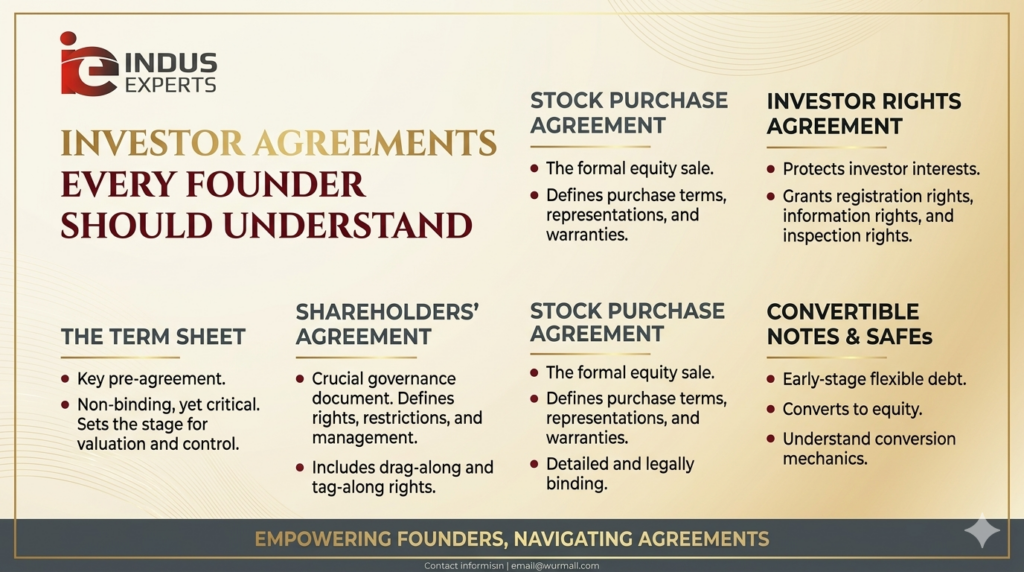
Investor Agreements Every Founder Should Understand
Raising investment is one of the most exciting stages in a startup’s journey, but many founders focus only on securing capital while overlooking the legal agreements that come with it. In reality, investor agreements can significantly influence ownership, decision-making power, future fundraising, and even the long-term survival of the business.
Many startups later face conflicts with investors not because of poor business performance, but because founders signed agreements without fully understanding the legal implications. Investor agreements are designed to protect both the startup and the investor, but poorly negotiated terms can lead to excessive dilution, loss of control, governance disputes, and operational restrictions.
Professional firms like Indus Experts, operating in the professional services and financial consulting sector, help startups manage fundraising documentation, governance structures, due diligence, compliance management, legal structuring, and investor readiness services.
Why Investor Agreements Are Important
Investor agreements create the legal foundation of the relationship between founders and investors. These agreements define ownership rights, investment terms, governance structures, investor protections, and exit mechanisms.
For investors, these agreements help protect their capital and ensure transparency. For founders, they provide clarity regarding operational control, responsibilities, and future obligations.
Without properly structured agreements, startups often face misunderstandings regarding:
- Equity ownership
- Voting rights
- Profit sharing
- Decision-making authority
- Exit rights
As startups grow and raise multiple funding rounds, these agreements become even more important because they affect future investments and company valuation.
Shareholders’ Agreement (SHA)
One of the most important investor agreements is the Shareholders’ Agreement (SHA). This agreement governs the relationship between shareholders and defines how the company will operate after investment.
The SHA usually covers:
- Shareholding rights
- Voting powers
- Share transfer restrictions
- Investor protections
- Exit rights
- Governance structures
A properly drafted SHA helps prevent conflicts between founders and investors while ensuring smoother business operations.
Institutional investors carefully negotiate SHA terms because these clauses directly impact future control and decision-making within the company.
Term Sheet
A term sheet is usually the first formal document exchanged during fundraising discussions. While it may initially appear non-binding, it outlines the core commercial terms of the investment.
The term sheet generally includes:
- Investment amount
- Valuation
- Equity dilution
- Investor rights
- Governance terms
- Exit conditions
Many founders make the mistake of signing term sheets without fully understanding the long-term impact of these clauses. Certain provisions agreed upon at the term sheet stage often become legally binding in final agreements.
This is why legal and financial advisory support is critical during fundraising negotiations.
Share Subscription Agreement (SSA)
The Share Subscription Agreement governs the actual investment transaction. It defines how and when the investor will subscribe to shares in the company.
The agreement typically includes:
- Number of shares issued
- Investment consideration
- Closing conditions
- Representations and warranties
- Compliance obligations
The SSA ensures that the investment process follows legal and regulatory requirements.
Founder Agreements
Investors always review founder agreements before investing because internal founder disputes are one of the biggest risks for startups.
Founder agreements generally define:
- Roles and responsibilities
- Equity ownership
- Vesting schedules
- Exit conditions
- Decision-making rights
Without a clear founder agreement, investors may worry about future ownership conflicts and governance instability.
Indus Experts supports startups through governance advisory and legal structuring services that help businesses create strong foundational agreements before fundraising.
ESOP Agreements
As startups grow, Employee Stock Option Plans (ESOPs) become an important part of fundraising and talent retention strategies. Investors carefully evaluate ESOP structures because employee equity affects ownership dilution and cap table management.
ESOP agreements generally define:
- Employee eligibility
- Vesting schedules
- Share allocation
- Exercise rights
- Exit provisions
Proper ESOP structuring helps startups attract talent while maintaining organized ownership planning.
Investor Rights Clauses Founders Must Understand
Investor agreements often include several important clauses that founders must carefully evaluate before signing.
Liquidation Preference
Liquidation preference determines how investors recover their investment during:
- Acquisitions
- Mergers
- Company shutdowns
This clause directly affects how proceeds are distributed among investors and founders.
Anti-Dilution Protection
Anti-dilution clauses protect investors if future funding rounds happen at lower valuations. However, aggressive anti-dilution provisions can significantly impact founder ownership.
Board Rights
Investors may negotiate board seats or observer rights to participate in strategic decision-making.
Reserved Matters
Certain investor agreements require investor approval before major company decisions such as:
- New fundraising
- Acquisitions
- Debt raising
- Share issuance
These clauses reduce unrestricted founder control.
Drag-Along and Tag-Along Rights
These clauses govern how shareholders participate during share sales or acquisitions and help manage exit situations more efficiently.
Why Due Diligence Matters
Modern investors conduct extensive legal and financial due diligence before investing in startups. They carefully examine:
- Corporate structure
- Compliance records
- Shareholding patterns
- Governance systems
- Existing agreements
- Intellectual property ownership
Startups with poorly drafted or incomplete agreements often struggle during due diligence and may lose funding opportunities.
Investor communities frequently highlight that governance quality and documentation discipline significantly influence investor confidence during fundraising.
Common Mistakes Founders Make
Many founders create legal problems during fundraising because they:
- Sign agreements without legal review
- Ignore long-term dilution impact
- Accept excessive investor control rights
- Maintain weak documentation
- Mismanage cap tables
- Delay governance planning
These mistakes often become major issues during future funding rounds or exit transactions.
Why Professional Advisory Is Important
Investor agreements are highly technical legal documents that affect the startup’s long-term ownership and operational structure. Founders who negotiate investment terms without professional guidance may unknowingly create future legal and financial risks.
Professional advisory helps startups:
- Negotiate fair investor terms
- Protect founder interests
- Maintain compliance
- Structure governance properly
- Prepare for due diligence
- Build investor confidence
How Indus Experts Helps Startups
Indus Experts assists startups and businesses through:
- Fundraising and investor readiness advisory
- Governance and compliance management
- Legal structuring and documentation
- Due diligence preparation
- ESOP and cap table advisory
- Corporate legal services
- Risk assurance and regulatory support
- International business structuring
The firm combines expertise from Chartered Accountants, Company Secretaries, lawyers, and financial professionals to help startups build legally strong and investor-ready businesses.
Conclusion
Investor agreements are not just legal formalities — they shape the future ownership, governance, and strategic direction of a startup. Founders who understand these agreements are far better equipped to negotiate balanced investment terms while protecting long-term control and scalability.
As startups grow and fundraising becomes more competitive, investors increasingly prioritize strong governance, legal clarity, and operational transparency. Businesses that maintain well-structured investor agreements and compliance systems are more likely to attract long-term investor confidence.
With expert guidance from Indus Experts, startups can confidently navigate fundraising negotiations, protect founder interests, and build a legally strong foundation for sustainable business growth.