


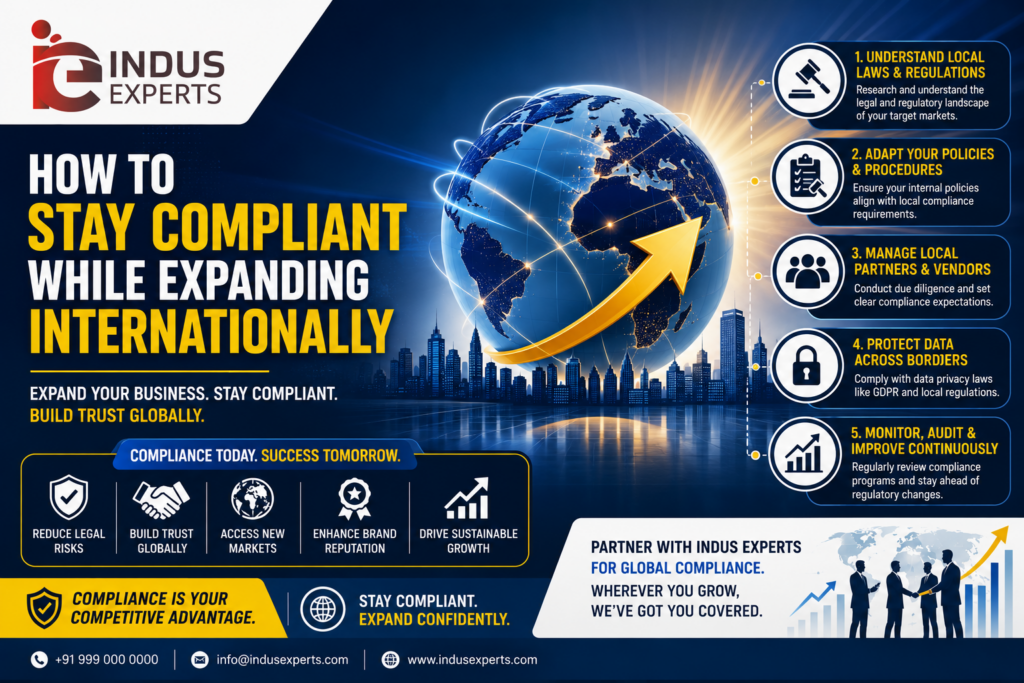
How to Stay Compliant While Expanding Internationally
Expanding a business internationally is an exciting milestone for startups and growing companies. Entering new markets opens opportunities for higher revenue, global partnerships, investor interest, and long-term growth. However, international expansion also brings complex legal, financial, and regulatory responsibilities that many businesses underestimate.
Every country has its own corporate laws, tax systems, licensing requirements, employment regulations, and reporting obligations. Businesses that expand without proper compliance planning often face penalties, operational delays, tax complications, and reputational risks. This is why maintaining compliance while expanding internationally is essential for sustainable global growth.
Professional firms like Indus Experts, operating in the professional services and financial consulting sector, support businesses through global incorporation, international compliance management, corporate legal advisory, governance solutions, and risk assurance services that help companies expand globally with confidence.
Choose the Right Business Structure
One of the first steps in international expansion is selecting the right legal structure for the business. Companies may choose to establish:
- Subsidiaries
- Branch offices
- Representative offices
- Joint ventures
- LLPs or local entities
The choice depends on tax efficiency, operational flexibility, ownership rules, and local regulatory requirements. An incorrect structure can create long-term tax burdens and compliance complications.
Indus Experts assists businesses with global incorporation and cross-border structuring services across countries including the USA, UK, UAE, Canada, Singapore, and New Zealand.
Understand Local Compliance Requirements
Every country has different regulatory frameworks governing:
- Corporate filings
- Tax registration
- Employment laws
- Licensing requirements
- Data protection laws
- Financial reporting standards
Businesses must understand local compliance obligations before beginning operations. Many companies face penalties simply because they assume regulations are similar across jurisdictions.
Strong compliance systems help businesses avoid legal disputes, regulatory scrutiny, and operational disruptions during international expansion. Governance experts also emphasize that businesses operating globally require structured compliance frameworks and centralized monitoring systems.
Maintain Proper Tax Compliance
International tax compliance is one of the most critical areas for expanding businesses. Companies operating across borders may face:
- Double taxation risks
- Transfer pricing regulations
- GST/VAT obligations
- Withholding tax requirements
- International reporting obligations
Improper tax planning can significantly increase operational costs and create legal exposure. Businesses should establish clear tax structures and reporting systems before entering foreign markets.
Indus Experts provides global tax compliance and international advisory services that help businesses manage tax risks while optimizing cross-border operations.
Strengthen Governance and Documentation
As businesses expand internationally, governance becomes increasingly important. Investors, regulators, and international partners expect businesses to maintain:
- Proper board documentation
- Compliance records
- Transparent reporting
- Internal controls
- Risk management systems
Poor governance often creates difficulties during fundraising, acquisitions, or international partnerships.
Indus Experts supports businesses through corporate governance, due diligence, secretarial services, and compliance management solutions that strengthen operational transparency and investor confidence.
Automate Compliance Processes
Managing compliance manually across multiple countries can become extremely difficult. Businesses should invest in compliance automation systems that help track:
- Filing deadlines
- Regulatory changes
- Reporting obligations
- Documentation workflows
- Internal approvals
Technology-driven compliance systems reduce human error and improve operational efficiency. Indus Experts also emphasizes compliance automation as part of modern governance and business management solutions.
Manage Cross-Border Risks Carefully
International expansion exposes businesses to additional risks involving foreign exchange regulations, contractual disputes, intellectual property protection, and data privacy laws.
Businesses should regularly conduct compliance reviews and risk assessments to identify governance gaps before they become serious legal issues. Risk assurance frameworks help organizations maintain stronger operational controls and regulatory preparedness.
How Indus Experts Helps Businesses Expand Globally
Indus Experts provides businesses with:
- Global company incorporation
- International compliance management
- FEMA and regulatory advisory
- Corporate legal services
- Secretarial and governance support
- Risk assurance solutions
- Tax planning and compliance
- Cross-border transaction advisory
The firm combines expertise from Chartered Accountants, Company Secretaries, lawyers, and financial professionals to help businesses expand internationally while maintaining strong compliance and governance systems.
Conclusion
International expansion offers significant growth opportunities, but businesses must prioritize compliance and governance to succeed globally. Ignoring regulatory obligations can result in penalties, operational disruptions, investor concerns, and reputational damage.
Businesses that establish strong compliance systems, governance structures, and risk management frameworks early are better prepared for sustainable international growth. With expert guidance from Indus Experts, companies can navigate global regulations confidently, reduce legal risks, and build a strong foundation for long-term international success.