


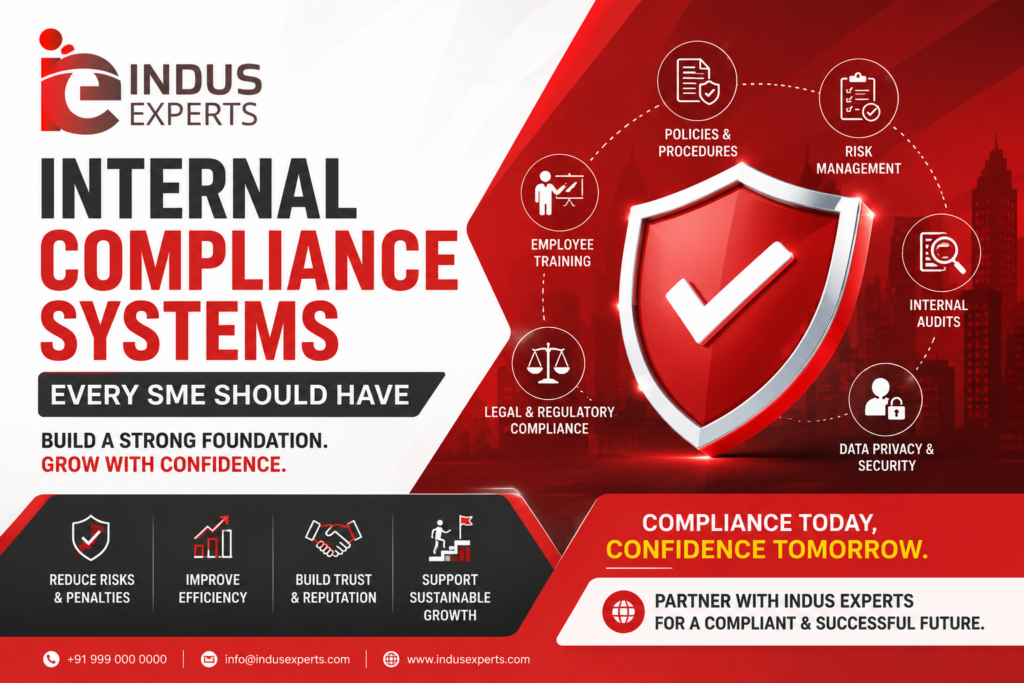
Internal Compliance Systems Every SME Should Have
In today’s competitive and highly regulated business environment, small and medium enterprises (SMEs) cannot afford to treat compliance as a secondary function. Many SMEs focus heavily on sales, operations, and growth while overlooking internal compliance systems until a legal notice, penalty, or operational issue arises. However, businesses that build strong internal compliance structures early are generally more stable, investor-ready, and better prepared for long-term growth.
Internal compliance systems help businesses ensure that legal, financial, operational, and governance obligations are managed properly. These systems reduce regulatory risks, improve transparency, and create operational discipline within the organization. Professional firms like Indus Experts, operating in the professional services and financial consulting sector, assist businesses through corporate governance advisory, compliance management, secretarial services, due diligence, and risk assurance solutions that help SMEs maintain strong and legally compliant operations.
A Structured Compliance Calendar
One of the most important systems every SME should maintain is a centralized compliance calendar. Businesses are required to manage multiple regulatory deadlines involving ROC filings, GST returns, income tax filings, labour law obligations, and statutory reporting. Without a structured tracking system, companies often miss important deadlines, leading to penalties and regulatory scrutiny.
An internal compliance calendar helps management track filing due dates, approval timelines, and reporting obligations in an organized manner. Automated reminders and centralized monitoring also improve accountability across departments and reduce the risk of missed compliance obligations.
Proper Documentation and Record Management
Strong documentation systems are essential for every SME. Businesses should maintain organized records relating to:
- Board meetings
- Financial statements
- Contracts and agreements
- Employee records
- Tax filings
- Statutory registers
Poor documentation often creates major difficulties during audits, fundraising, legal disputes, or due diligence reviews. Investors and regulators expect businesses to maintain transparent and accessible records that demonstrate governance discipline.
Indus Experts supports businesses through secretarial and governance advisory services that help companies establish strong documentation and compliance management systems.
Internal Financial Controls
Financial compliance is one of the most critical areas for SMEs. Internal financial control systems help businesses maintain accurate reporting, prevent fraud, and improve operational transparency.
Effective financial controls generally include:
- Expense approval processes
- Budget monitoring
- Invoice verification systems
- Audit mechanisms
- Segregation of financial responsibilities
Businesses with strong financial controls are better positioned for investor confidence, tax compliance, and long-term operational stability. Risk assurance experts consistently emphasize the importance of internal controls in strengthening governance and reducing operational risks.
Compliance Monitoring and Risk Management
Every SME should have a system for regularly reviewing compliance risks and governance gaps. Internal compliance reviews help identify issues before they become serious legal or financial problems.
This includes monitoring:
- Regulatory changes
- Pending filings
- Contractual obligations
- Tax compliance
- Employee-related compliance
Businesses that proactively monitor compliance are generally more resilient and operationally efficient. Modern governance frameworks increasingly focus on continuous compliance monitoring rather than reactive corrections.
Conclusion
Internal compliance systems are no longer optional for SMEs. They are essential for reducing regulatory risks, improving operational efficiency, strengthening governance, and building investor confidence. Businesses that establish strong compliance frameworks early are better prepared for expansion, fundraising, audits, and sustainable growth.
With expert guidance from Indus Experts, SMEs can strengthen governance systems, improve compliance management, and build a strong operational foundation for long-term business success.