


How Venture Debt Works in India
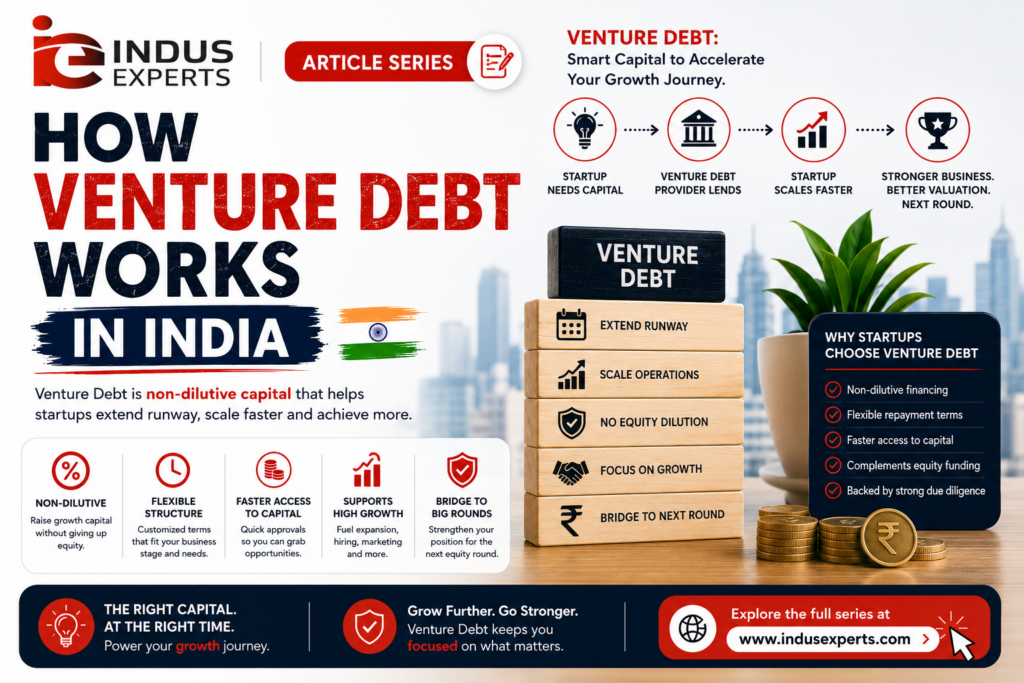
For many startups, fundraising usually means giving away equity to investors in exchange for capital. While equity funding remains one of the most common financing methods, modern startups are increasingly exploring alternative funding options that allow them to raise capital without excessive dilution. One of the fastest-growing financing instruments in the Indian startup ecosystem is Venture Debt.
Venture debt has become especially popular among growth-stage startups that want to extend their runway, manage working capital, or scale operations while preserving founder ownership.
Professional firms like Indus Experts, operating in the professional services and financial consulting sector, help startups with fundraising advisory, venture debt structuring, due diligence, governance, compliance management, and investor readiness services.
What Is Venture Debt?
Venture debt is a type of loan provided to startups and growth-stage companies that are already backed by venture capital investors or have strong growth potential.
Unlike traditional bank loans, venture debt providers focus more on:
- Startup growth trajectory
- Investor backing
- Revenue potential
- Business scalability
rather than only relying on profitability or collateral.
In simple terms, venture debt allows startups to borrow money without immediately giving away additional equity ownership.
Why Startups Use Venture Debt
Many startups use venture debt to:
- Extend cash runway
- Reduce founder dilution
- Finance working capital
- Support expansion plans
- Fund inventory or marketing
- Delay the next equity round
For founders, venture debt can be a strategic financing tool because it helps preserve ownership while still providing growth capital.
India’s growing startup ecosystem has increased the popularity of venture debt among technology, SaaS, fintech, healthcare, and consumer businesses.
How Venture Debt Works
The process usually begins after a startup raises equity funding from angel investors or venture capital firms. Venture debt lenders evaluate:
- Existing investor profile
- Revenue growth
- Burn rate
- Cash flow visibility
- Business scalability
- Market opportunity
Once approved, the lender provides a loan that the startup repays over a fixed tenure along with interest.
Unlike equity investors, venture debt providers generally do not take major ownership control in the company. However, they may receive:
- Small equity warrants
- Board observation rights
- Financial reporting requirements
depending on the deal structure.
Who Provides Venture Debt in India?
Venture debt in India is usually provided by:
- Specialized venture debt funds
- NBFCs
- Alternative investment firms
- Financial institutions
The Indian venture debt ecosystem has grown rapidly as startups seek non-dilutive funding alternatives alongside equity investments.
Benefits of Venture Debt
Lower Equity Dilution
One of the biggest advantages of venture debt is that founders can raise additional capital without giving away significant ownership.
This becomes especially important during growth stages where preserving founder equity can strongly impact long-term control and future wealth creation.
Faster Access to Capital
Compared to equity fundraising, venture debt transactions are often completed faster because startups do not need to negotiate complex valuation discussions.
Supports Growth Without Immediate Equity Pressure
Startups frequently use venture debt to:
- Expand operations
- Launch products
- Hire teams
- Increase marketing efforts
without immediately raising another equity round.
Improves Runway Before Future Fundraising
Many startups strategically use venture debt to improve traction and metrics before raising the next equity round at a better valuation.
Risks and Challenges of Venture Debt
Although venture debt offers several advantages, it also carries financial obligations.
Startups must repay the loan regardless of future business performance. This creates pressure on:
- Cash flow management
- Revenue generation
- Financial discipline
If a startup lacks proper financial planning, debt obligations can become difficult to manage.
Investors and advisors often emphasize that venture debt should complement growth strategy rather than replace sustainable business planning.
Why Due Diligence Matters in Venture Debt
Before providing debt financing, lenders conduct detailed due diligence on:
- Financial records
- Governance practices
- Compliance status
- Existing liabilities
- Revenue quality
- Operational performance
Startups with weak compliance systems or poor documentation often struggle to secure venture debt financing.
Indus Experts provides due diligence, governance, and compliance advisory services that help startups become financially and operationally prepared for institutional funding.
Common Mistakes Startups Make
Many startups create financing problems because they:
- Raise debt without cash flow planning
- Ignore repayment capability
- Maintain weak financial reporting
- Operate with poor governance systems
- Mismanage compliance obligations
Venture debt requires strong operational discipline and financial transparency.
Venture Debt vs Equity Funding
The biggest difference between venture debt and equity funding is ownership dilution.
In equity funding:
- Investors receive ownership shares
- Founders dilute equity
In venture debt:
- Startups repay borrowed capital with interest
- Founder ownership dilution is limited
Most growth-stage startups use a balanced mix of both equity and venture debt to optimize funding strategy.
How Indus Experts Assists Startups
Indus Experts supports startups and businesses through:
- Venture debt and fundraising advisory
- Governance and due diligence services
- Financial structuring
- Compliance management
- Corporate legal advisory
- Investor readiness support
- Risk assurance services
- International business structuring
The firm combines expertise from Chartered Accountants, Company Secretaries, lawyers, and financial professionals to help businesses structure sustainable and compliant funding strategies. (indusexperts.com)
Conclusion
Venture debt has emerged as an important financing solution for Indian startups looking to scale without excessive equity dilution. When used strategically, it can help businesses extend runway, strengthen growth, and improve fundraising flexibility.
However, venture debt also requires careful financial planning, governance discipline, and compliance readiness. Startups that maintain strong operational and financial systems are far more likely to benefit from venture debt successfully.
With expert support from Indus Experts, startups can structure funding strategies effectively, maintain compliance, and prepare confidently for long-term business growth.