


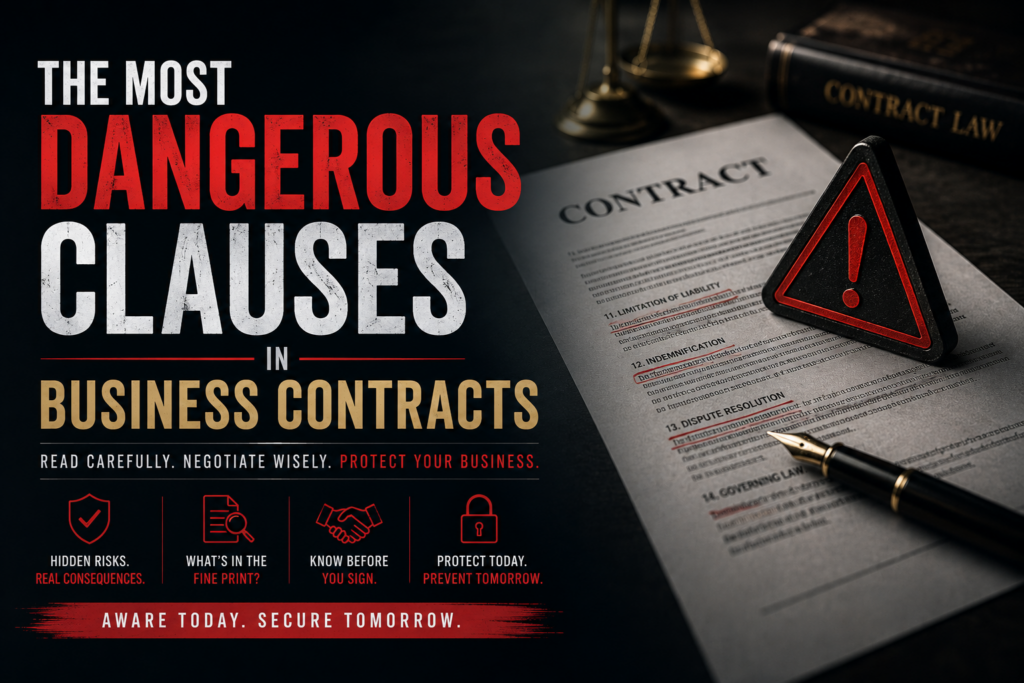
The Most Dangerous Clauses in Business Contracts
Business contracts are the foundation of every professional relationship. Whether it involves investors, vendors, employees, clients, or business partners, contracts define rights, responsibilities, obligations, and legal protections. However, many businesses sign agreements without fully understanding the legal implications hidden within certain clauses.
A single poorly drafted clause can expose a company to financial losses, legal disputes, operational restrictions, or even long-term business risks. Startups and SMEs are especially vulnerable because they often focus on closing deals quickly without proper legal review. This is why understanding dangerous contract clauses is essential for protecting business interests.
Professional firms like Indus Experts, operating in the professional services and financial consulting sector, help businesses manage corporate legal advisory, contract review, governance, due diligence, compliance management, and risk assurance services to reduce legal and operational risks.
Ambiguous Termination Clauses
One of the most dangerous provisions in any business contract is an unclear termination clause. Many agreements allow one party to terminate the contract without adequate notice or reasonable grounds. This can leave businesses suddenly without clients, suppliers, revenue streams, or operational support.
A well-drafted termination clause should clearly define:
- Grounds for termination
- Notice periods
- Exit obligations
- Financial settlement terms
Without these protections, businesses may face unexpected operational disruptions and legal disputes.
Indus Experts assists businesses with contract structuring and legal advisory services that help companies negotiate balanced and legally secure agreements.
Unlimited Liability Clauses
Some contracts contain clauses that impose unlimited liability on one party for losses, damages, or legal claims. These provisions can create massive financial exposure, especially for startups and small businesses with limited resources.
Businesses should carefully review liability clauses to ensure there are reasonable limitations on:
- Financial liability
- Indirect damages
- Consequential losses
- Third-party claims
Limiting liability helps businesses manage risks and avoid unpredictable financial consequences.
Unfair Indemnity Clauses
Indemnity clauses require one party to compensate another for losses arising from specific situations. However, poorly drafted indemnity clauses may unfairly transfer excessive legal and financial responsibility to one side.
Many businesses unknowingly agree to indemnify parties for:
- Regulatory penalties
- Third-party claims
- Operational losses
- Legal expenses
These obligations can become extremely expensive during disputes or litigation. Proper legal review is critical before accepting broad indemnity provisions.
Intellectual Property Ownership Risks
Intellectual property clauses are particularly important for startups, technology companies, and creative businesses. Some contracts transfer ownership of intellectual property, software, designs, or confidential business information without founders fully understanding the consequences.
Businesses must clearly define:
- IP ownership rights
- Licensing permissions
- Usage restrictions
- Confidentiality protections
Failure to secure intellectual property rights can damage long-term business value and investor confidence.
Indus Experts also provides IP rights and corporate legal services that help businesses protect intellectual assets and maintain legally secure commercial arrangements. Restrictive Non-Compete Clauses
Non-compete clauses may prevent businesses or individuals from operating in similar industries after the contract ends. Excessively broad restrictions can limit future business opportunities and operational flexibility.
Businesses should ensure non-compete provisions are:
- Reasonable in duration
- Limited geographically
- Clearly defined
- Legally enforceable
Overly restrictive clauses often create unnecessary legal complications and business limitations.
Dispute Resolution and Jurisdiction Clauses
Many companies overlook jurisdiction and dispute resolution clauses while signing contracts. These provisions determine:
- Which country’s laws apply
- Where disputes will be resolved
- Whether arbitration is mandatory
An unfavorable jurisdiction clause may force businesses into expensive legal proceedings in unfamiliar locations. Cross-border agreements especially require careful legal review to avoid future litigation risks.
Indus Experts supports businesses through cross-border legal advisory, governance, and international business structuring services that help companies manage global contractual risks effectively.
Conclusion
Business contracts are not merely formalities — they are powerful legal documents that directly affect financial security, operational stability, and long-term business growth. Dangerous clauses involving termination rights, liability, indemnity, intellectual property, and dispute resolution can create significant risks if ignored.
Businesses should never sign agreements without carefully reviewing contractual obligations and understanding potential legal exposure. Strong legal review processes help companies avoid disputes, protect business interests, and maintain operational confidence.
With expert guidance from Indus Experts, businesses can strengthen contract management, reduce legal risks, and build secure commercial relationships that support sustainable growth.