


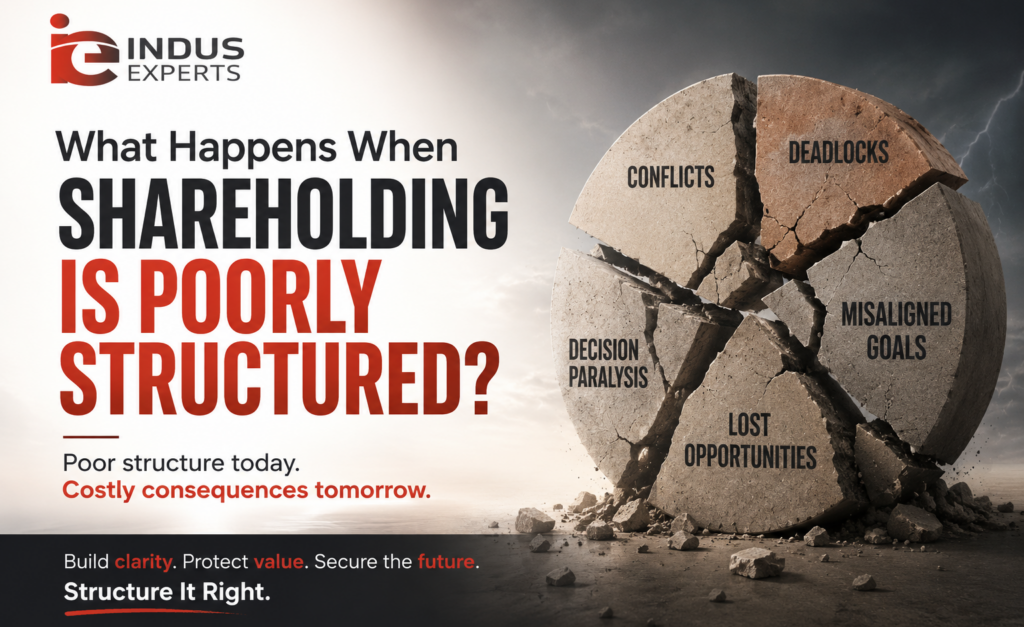
What Happens When Shareholding Is Poorly Structured?
For startups and growing businesses, shareholding structure is far more than just deciding who owns how many shares. It directly affects investor confidence, founder control, governance, fundraising ability, taxation, and long-term business stability. Yet many startups create ownership structures casually during their early stages without understanding the legal and financial consequences that may arise later.
In the beginning, founders often distribute shares informally among co-founders, friends, early employees, or family members without proper planning or legal guidance. While this may seem manageable initially, poorly structured shareholding eventually becomes one of the biggest obstacles during fundraising, due diligence, acquisitions, and scaling.
Professional firms like Indus Experts, operating in the professional services and financial consulting sector, help startups and businesses manage equity structuring, governance advisory, due diligence, compliance management, legal documentation, and investor readiness services.
Why Shareholding Structure Is Important
A company’s shareholding structure defines ownership distribution and determines how control, voting rights, profits, and decision-making powers are shared among stakeholders.
Investors carefully review cap tables and ownership structures before investing because poorly structured equity creates legal uncertainty and governance risks. A clean and well-planned shareholding structure reflects operational maturity and improves investor confidence.
When ownership is poorly planned, businesses often face conflicts regarding:
- Founder control
- Equity dilution
- Voting rights
- Investor protection
- Exit planning
- Future fundraising
As startups scale, these problems become increasingly difficult to fix.
Founder Disputes Become More Common
One of the most common consequences of poor shareholding structuring is founder conflict. Many startups divide ownership equally at the beginning without properly defining roles, responsibilities, contribution levels, or vesting conditions.
Over time, problems arise when:
- One founder contributes significantly more than others
- A co-founder exits early
- Decision-making authority becomes unclear
- Equity ownership no longer reflects actual involvement
Without structured founder agreements and vesting mechanisms, disputes regarding ownership and control can seriously damage the business.
Investors generally avoid startups where founder equity disputes remain unresolved because such conflicts create operational instability.
Investors Lose Confidence
Institutional investors carefully examine shareholding structures during due diligence. A messy cap table immediately raises concerns about governance quality and future scalability.
Investors become cautious when they see:
- Excessive equity dilution at early stages
- Unclear ownership records
- Informal share allotments
- Missing shareholder agreements
- Large inactive shareholders
- Poorly documented ESOPs
A poorly structured cap table may force investors to demand restructuring before proceeding with funding discussions.
Modern investors prioritize clean governance and transparent ownership because these factors directly affect future fundraising and exit opportunities.
Excessive Founder Dilution
Many founders unknowingly give away too much equity during early stages because they focus only on immediate funding or short-term support.
As the startup raises additional funding rounds, founders may realize they no longer hold meaningful ownership or control in the company. Excessive dilution can create:
- Loss of strategic control
- Reduced decision-making authority
- Lower founder motivation
- Governance conflicts with investors
Improper dilution planning also affects future fundraising because investors prefer companies where founders still maintain sufficient ownership incentives.
Future Fundraising Becomes Difficult
A poorly structured shareholding pattern often creates major complications during future fundraising rounds.
Problems usually arise when:
- Previous investments were improperly documented
- Share allotments were non-compliant
- Valuation records are unclear
- ESOP allocations are poorly managed
- Shareholder rights conflict with new investor expectations
Future investors may hesitate to invest in startups with ownership complications because resolving these issues often requires time-consuming legal restructuring.
Indus Experts assists startups with governance advisory, cap table management, due diligence preparation, and investor readiness services that help businesses maintain clean and scalable ownership structures.
Governance Problems Increase
Poor shareholding structures frequently create governance instability. When voting rights, control rights, and ownership responsibilities are not properly documented, decision-making becomes complicated.
This can lead to:
- Internal management conflicts
- Delayed strategic decisions
- Shareholder disputes
- Lack of accountability
- Operational inefficiencies
As startups grow, governance quality becomes increasingly important for investors, regulators, and strategic partners.
Strong governance frameworks supported by structured ownership systems improve transparency and business stability.
ESOP and Employee Equity Issues
Many startups introduce employee stock options without properly planning dilution impact or ownership structure. Poor ESOP management often creates confusion regarding:
- Vesting schedules
- Share allocation
- Employee exits
- Ownership dilution
- Cap table accuracy
Improperly structured ESOPs can negatively affect investor confidence and future fundraising negotiations.
Professional structuring helps startups balance employee incentives while maintaining healthy founder and investor ownership levels.
Legal and Compliance Risks
Improper share allotments and undocumented ownership changes may create legal and regulatory exposure under company law and FEMA regulations, especially in cases involving foreign investors.
Common compliance mistakes include:
- Delayed share allotment filings
- Missing valuation reports
- Improper shareholder documentation
- FEMA non-compliance in foreign investments
- Incomplete ROC records
These issues frequently emerge during legal due diligence and may delay investments or acquisitions.
Acquisitions and Exits Become Complicated
When businesses prepare for acquisitions or strategic exits, poorly structured ownership often becomes a major obstacle.
Acquirers carefully review:
- Shareholding records
- Investor rights
- Founder ownership
- Pending disputes
- ESOP structures
- Compliance history
Messy ownership structures create uncertainty regarding control and transaction approvals, which can reduce valuation or even collapse acquisition discussions.
Investor and acquisition advisors frequently emphasize that clean ownership structures are critical for smooth exits and scalable growth. (maroonadvisors.co)
Why Due Diligence Preparation Matters
Due diligence is one of the most important stages during fundraising, acquisitions, and strategic partnerships. Investors and buyers thoroughly examine whether the company’s ownership structure is legally sound and operationally transparent.
Businesses with properly documented shareholding structures generally experience:
- Faster due diligence processes
- Better investor confidence
- Higher valuation credibility
- Reduced legal risk
- Smoother fundraising discussions
Poorly structured businesses, however, often face delays, renegotiations, or failed transactions.
How Indus Experts Helps Businesses
Indus Experts supports startups and growing businesses through:
- Equity and cap table structuring
- Governance and compliance advisory
- Due diligence preparation
- Shareholder agreement drafting
- ESOP advisory
- Corporate legal services
- FEMA and regulatory compliance
- Investor readiness support
The firm combines expertise from Chartered Accountants, Company Secretaries, lawyers, and financial professionals to help businesses build legally strong and investor-ready ownership structures. (Indus Experts)
Conclusion
A poorly structured shareholding pattern can create serious legal, financial, and operational challenges for startups and growing businesses. What may appear manageable during early stages can later become a major obstacle during fundraising, scaling, acquisitions, and investor due diligence.
Strong ownership planning is essential for protecting founder interests, maintaining governance stability, attracting investors, and supporting long-term scalability. Businesses that proactively structure their shareholding frameworks are far better prepared for sustainable growth and future investment opportunities.
With expert guidance from Indus Experts, startups can create well-structured ownership systems, strengthen governance, and confidently prepare for long-term business success.