


Seed Funding vs Series A — What Changes Legally?
For every startup, fundraising marks a major milestone in the journey from idea to scalable business. However, many founders assume that Seed Funding and Series A funding are simply different stages of raising money. In reality, the legal expectations between these two rounds are very different. As startups grow, investors begin focusing not only on growth potential but also on governance, compliance, financial discipline, and operational maturity.
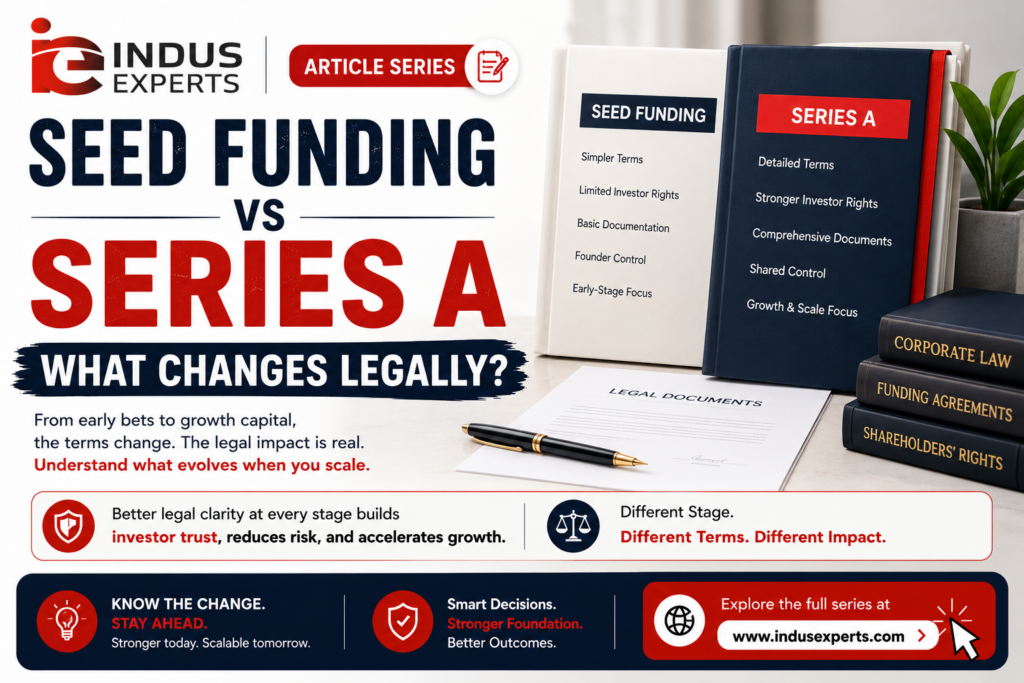
At the seed stage, investors often invest in the founders and the vision. By the time a startup reaches Series A, investors expect a professionally managed business with proper legal systems already in place. Startups that fail to understand this transition often face delays, reduced valuations, or failed funding discussions.
Professional firms like Indus Experts, operating in the professional services and financial consulting sector, help startups navigate fundraising through governance advisory, due diligence support, compliance management, legal structuring, and investor readiness services.
Understanding Seed Funding
Seed funding is generally the first external investment a startup raises to build its product, validate its market, and begin early operations. At this stage, businesses are usually in their early growth phase and may still be experimenting with business models and customer acquisition strategies.
Because the startup is still evolving, legal structures during seed funding are often relatively simple. Investors may rely more on founder credibility, innovation potential, and market opportunity rather than detailed operational systems. Seed investors commonly include angel investors, startup accelerators, and early-stage venture capital firms.
The legal documentation during this phase is usually less complicated, and investors often provide founders with greater operational flexibility.
Understanding Series A Funding
Series A funding usually takes place when the startup has already achieved some level of market traction, customer growth, and revenue visibility. At this stage, the startup is expected to demonstrate scalability and operational maturity.
Series A investors are typically institutional venture capital firms that invest larger amounts of capital and therefore conduct far deeper legal and financial evaluations. Unlike seed investors, Series A investors focus heavily on governance quality, compliance systems, financial transparency, and long-term risk management.
This is where startups experience a major legal transformation.
Governance Becomes More Structured
One of the biggest changes between Seed Funding and Series A is governance. During seed funding, governance structures are often informal, and founders usually retain significant control over operations and decision-making.
However, Series A investors generally require more formal governance systems. Investors may ask for board representation, voting rights, reporting obligations, and approval authority over major business decisions. Startups are expected to maintain structured operational processes and transparent decision-making systems.
Institutional investors prefer businesses that operate with accountability and professional governance because it reduces operational and investment risk.
Indus Experts assists startups in building governance and compliance frameworks that align with institutional investor expectations and support long-term scalability.
Due Diligence Becomes Far More Intensive
Seed-stage due diligence is often limited because investors are investing primarily in future potential. However, Series A due diligence becomes highly detailed and comprehensive.
Investors carefully review financial statements, compliance records, tax filings, founder agreements, employment contracts, intellectual property ownership, and operational systems. They want to verify that the startup is legally compliant and financially disciplined before making larger investments.
Even minor compliance gaps or missing documentation can create serious concerns during Series A fundraising discussions. This is why startups that delay legal structuring and operational discipline during early stages often struggle later.
Legal Documentation Becomes More Sophisticated
Legal agreements during seed rounds are generally simpler and may include convertible notes, SAFE agreements, or basic shareholder arrangements. Since the startup is still early in its journey, investors may accept greater flexibility.
By Series A, legal documentation becomes significantly more detailed. Investor agreements usually include clauses related to anti-dilution protection, liquidation preferences, founder vesting, information rights, board powers, and investor protections.
These legal agreements can strongly influence founder control, ownership dilution, and future fundraising flexibility. Founders who do not fully understand these legal structures may unknowingly lose significant decision-making power in later stages.
Compliance Expectations Increase Significantly
At the seed stage, startups may still be developing their compliance systems. However, Series A investors expect the company to maintain updated ROC filings, GST compliance, tax records, board resolutions, statutory registers, and audit-ready financial reporting systems.
Strong compliance demonstrates operational maturity and reduces investor concerns regarding regulatory risk. Investors today are highly cautious about businesses with weak compliance histories because regulatory issues can create future legal and financial liabilities.
Indus Experts provides compliance management, due diligence, and risk assurance services that help startups become investor-ready before institutional fundraising.
Founder Control Starts Evolving
During seed funding, founders usually operate with substantial independence. Investors may provide strategic guidance but often remain less involved in day-to-day operations.
By Series A, investor involvement becomes much more structured. Institutional investors frequently negotiate board seats, voting powers, and approval rights over strategic business decisions such as future fundraising, acquisitions, or major financial commitments.
This shift reflects the growing importance of governance as startups scale.
ESOPs and Ownership Structures Become Important
As startups grow and begin hiring senior talent, Employee Stock Option Plans (ESOPs) become increasingly important. During early stages, ESOP discussions may remain informal, but Series A investors usually expect properly structured ESOP frameworks with defined vesting schedules and clear ownership planning.
Investors carefully review cap tables and ownership structures because messy or poorly documented equity arrangements can create legal complications later.
Intellectual Property Protection Gains Importance
At the seed stage, some startups delay intellectual property protection due to budget or operational limitations. However, Series A investors expect startups to legally secure ownership of their:
- Brand assets
- Technology
- Patents
- Software
- Proprietary systems
A startup without proper intellectual property documentation may face significant legal and valuation concerns during due diligence.
Indus Experts supports startups through intellectual property advisory and legal structuring services that strengthen investor confidence and reduce operational risk.
Why Many Startups Struggle During the Transition
Many startups successfully raise seed funding but fail to secure Series A investment because they underestimate the importance of legal and operational maturity. Common issues include weak governance systems, poor compliance management, incomplete documentation, unrealistic financial reporting, and poorly managed cap tables.
Investors today expect startups to demonstrate not only growth potential but also structured business operations capable of supporting long-term scalability.
How Indus Experts Helps Startups
Indus Experts supports startups through every stage of fundraising by providing governance advisory, due diligence support, compliance management, corporate legal structuring, ESOP advisory, investor readiness services, and risk assurance solutions.
The firm combines expertise from Chartered Accountants, Company Secretaries, lawyers, and financial professionals to help startups build legally compliant and scalable businesses that meet institutional investor expectations. (indusexperts.com)
Conclusion
The transition from Seed Funding to Series A is not simply about raising larger amounts of capital. It represents a major shift in legal complexity, governance expectations, compliance standards, and operational maturity.
While seed investors often focus on the founder’s vision and potential, Series A investors expect startups to operate with professional governance, strong financial systems, legal transparency, and compliance discipline. Startups that prepare early for these expectations are far more likely to secure institutional funding and scale successfully.
With expert guidance from Indus Experts, startups can confidently navigate the legal complexities of fundraising while building a strong foundation for long-term business growth.