


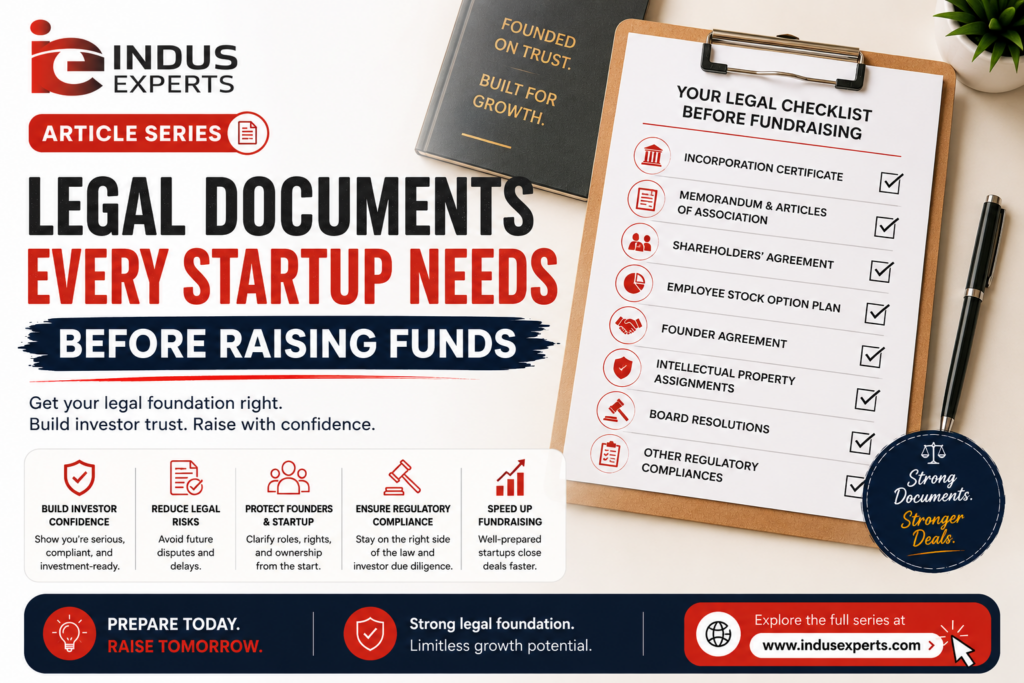
Legal Documents Every Startup Needs Before Raising Funds
For most startups, raising funds is a major milestone that validates the business idea and opens opportunities for growth. However, investors today do not invest based only on vision or market potential. Before funding a startup, they carefully examine whether the business is legally structured, operationally organized, and compliant with regulatory requirements.
This is why legal documentation plays a critical role in fundraising.
Many startups lose investment opportunities not because of weak products, but because they fail to maintain proper agreements, compliance records, and governance structures. Investors want assurance that the business is protected from legal disputes, ownership conflicts, and regulatory risks before they commit capital.
Professional firms like Indus Experts, operating in the professional services and financial consulting sector, help startups become investor-ready through corporate structuring, legal advisory, due diligence, governance management, compliance support, and fundraising advisory services.
Why Legal Documentation Matters Before Fundraising
Investors conduct extensive due diligence before investing in any startup. During this process, they review:
- Ownership structure
- Founder rights
- Financial records
- Compliance status
- Contracts and agreements
- Intellectual property ownership
If documentation is incomplete or poorly structured, investors may:
- Delay funding
- Reduce valuation
- Demand stricter investment terms
- Completely withdraw from the deal
Strong legal documentation increases investor confidence and shows that the startup is professionally managed.
Founder Agreement
A founder agreement is one of the most important documents for any startup. It clearly defines:
- Founder roles and responsibilities
- Equity ownership
- Decision-making rights
- Vesting conditions
- Exit terms
Many startups initially operate informally because founders trust each other personally. However, as the business grows, misunderstandings regarding ownership and responsibilities often create major conflicts.
Investors prefer startups with clearly documented founder relationships because it reduces future governance risks.
Shareholders’ Agreement (SHA)
A Shareholders’ Agreement governs the relationship between shareholders and defines how the company will operate after investment.
It usually includes:
- Voting rights
- Share transfer restrictions
- Investor rights
- Exit clauses
- Anti-dilution protection
- Dispute resolution mechanisms
A well-drafted SHA helps avoid conflicts between founders and investors during future funding rounds.
Employment Agreements
Startups often hire employees informally during early growth stages. However, investors expect businesses to maintain proper employment documentation.
Employment agreements help define:
- Salary structure
- Roles and responsibilities
- Confidentiality obligations
- Intellectual property ownership
- Termination conditions
Without proper contracts, startups may face operational and legal risks later.
Non-Disclosure Agreements (NDAs)
Startups frequently share sensitive information with:
- Employees
- Consultants
- Vendors
- Investors
- Technology partners
NDAs help protect confidential business information, product ideas, financial data, and operational strategies from misuse.
For startups working on innovative technology or proprietary systems, confidentiality agreements are extremely important.
Intellectual Property (IP) Documentation
Investors carefully verify whether the startup legally owns its intellectual property.
Important IP-related documents include:
- Trademark registrations
- Patent filings
- Copyright ownership
- Software assignment agreements
- Brand protection records
A startup without proper IP ownership may face serious legal and valuation concerns during due diligence.
Indus Experts provides IP rights and patent advisory services that help startups secure their innovation and strengthen investor confidence.
ESOP Documentation
Employee Stock Option Plans (ESOPs) are commonly used by startups to attract and retain talent.
Proper ESOP documentation helps define:
- Employee eligibility
- Vesting schedules
- Share allocation
- Exercise rights
- Exit conditions
Poorly structured ESOPs can create ownership confusion and negatively impact future fundraising discussions.
Compliance and Regulatory Records
Investors expect startups to maintain updated compliance records, including:
- ROC filings
- GST filings
- Tax records
- Board resolutions
- Statutory registers
- DPIIT recognition documents
Compliance gaps are often viewed as operational weaknesses and governance risks during due diligence.
Vendor and Service Agreements
Startups rely heavily on external vendors, consultants, freelancers, and technology partners. Proper vendor agreements help define:
- Payment terms
- Scope of work
- Confidentiality obligations
- Ownership rights
- Service responsibilities
Without written agreements, disputes can arise regarding deliverables, payments, and intellectual property ownership.
Data Protection and Privacy Policies
As startups increasingly collect customer and business data, investors also evaluate data protection practices.
Businesses handling customer information should maintain:
- Privacy policies
- Data protection clauses
- Cybersecurity procedures
- User consent mechanisms
Strong data governance practices improve operational credibility and reduce compliance risks.
Why Due Diligence Preparation Is Essential
Modern investors carefully analyze legal and operational risks before investing. Due diligence has become one of the most important stages in startup fundraising.
Investor communities and startup advisors frequently discuss how poor documentation and weak compliance structures become major reasons funding deals collapse during due diligence.
Businesses that maintain organized documentation and transparent governance systems usually complete fundraising discussions more efficiently.
How Indus Experts Helps Startups
Indus Experts supports startups and businesses through:
- Startup incorporation and structuring
- Corporate legal advisory
- Governance and compliance management
- Financial and legal due diligence
- ESOP advisory
- Intellectual property support
- International business structuring
- Investor readiness services
The firm combines expertise from Chartered Accountants, Company Secretaries, lawyers, and financial professionals to help startups build legally compliant and investor-ready businesses. (Indus Experts)
Conclusion
Fundraising is not only about pitching a great idea — it is about proving that the startup is legally structured, operationally disciplined, and prepared for long-term growth.
Strong legal documentation protects founders, improves investor confidence, reduces operational risks, and strengthens business credibility during due diligence. Startups that proactively build proper legal and compliance systems are far more likely to attract investors and scale successfully.
With professional guidance from Indus Experts, startups can strengthen their legal foundations, maintain compliance, and confidently prepare for fundraising opportunities.