


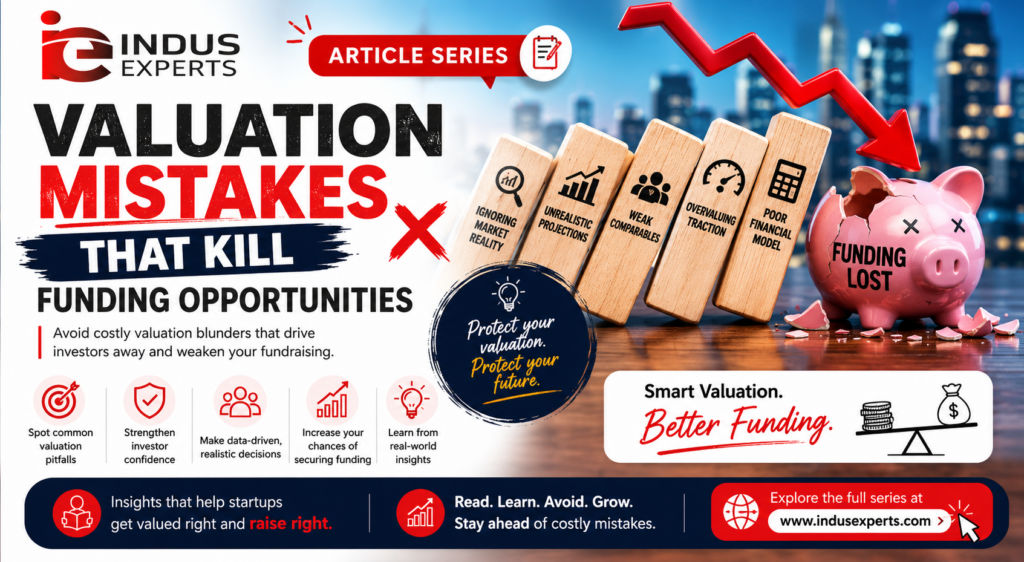
Valuation Mistakes That Kill Funding Opportunities
In the startup world, valuation is often seen as a symbol of success. Founders proudly discuss high valuations because they believe it reflects business potential and market confidence. However, in reality, an unrealistic or poorly planned valuation can become one of the biggest reasons investors walk away from a deal.
Investors today are far more cautious than before. They do not invest based only on ideas or market excitement. They evaluate financial discipline, governance, compliance, scalability, and operational transparency before agreeing to fund a business. Even promising startups lose investment opportunities when their valuation does not align with business reality.
Professional firms like Indus Experts, operating in the professional services and financial consulting sector, help startups build investor-ready businesses through governance advisory, due diligence, compliance management, financial structuring, and legal support services.
Why Valuation Matters in Fundraising
Valuation is not just about deciding how much a startup is worth. It directly impacts:
- Founder ownership
- Investor confidence
- Future fundraising rounds
- Equity dilution
- Business credibility
A startup with an unrealistic valuation may struggle to attract serious investors because investors expect the valuation to reflect actual business performance and future growth capability.
The Most Common Valuation Mistakes Founders Make
Overestimating Business Potential
One of the biggest mistakes startups make is demanding valuations based on assumptions rather than measurable progress. Many founders compare their startups with unicorn companies or rapidly growing global businesses without considering differences in market size, revenue, execution capability, and growth stage.
Investors usually look for evidence such as:
- Revenue growth
- Customer traction
- Product-market fit
- Scalability
- Profitability potential
If a startup cannot justify its valuation with real business data, investors often lose confidence.
Weak Financial Management
Investors pay close attention to financial discipline during funding discussions. Even if the startup has growth potential, poor accounting practices can immediately create concerns.
Many startups fail because they maintain:
- Incomplete bookkeeping
- Inconsistent financial reports
- Weak cash flow visibility
- Poor expense management
During due diligence, investors carefully verify financial statements, tax filings, GST records, and revenue numbers. Any inconsistency can damage valuation credibility.
Indus Experts helps startups strengthen financial governance and due diligence readiness to improve investor confidence.
Unrealistic Revenue Projections
Founders often create aggressive revenue forecasts to justify higher valuations. While optimism is expected in startups, investors prefer realistic and data-backed projections.
Exaggerated projections without proper operational planning make investors question whether founders truly understand the market and execution challenges.
Modern investors are more interested in sustainable growth than unrealistic growth claims.
Ignoring Founder Dilution
Some startups focus entirely on securing the highest valuation without understanding how future funding rounds affect ownership.
Improper valuation planning can lead to:
- Excessive dilution in later rounds
- Complex cap tables
- Reduced founder control
- Difficulty raising future investments
A startup that raises funds at an inflated valuation may later face a down round if growth expectations are not achieved. This can negatively affect both founders and existing investors.
Poor Governance and Compliance
Today’s investors evaluate much more than revenue potential. They also examine whether the startup maintains:
- Proper compliance systems
- Legal documentation
- Tax filings
- Governance practices
- Operational transparency
Startups with poor governance structures often struggle to justify premium valuations because investors associate weak governance with higher business risk.
Indus Experts provides governance, compliance, and risk assurance services that help businesses build structured and investor-ready operations.
Messy Cap Tables and Equity Structures
A poorly managed cap table is another major valuation concern for investors.
Problems usually arise when startups:
- Make informal equity promises
- Fail to record share transfers properly
- Mismanage ESOP allocations
- Operate with unclear ownership structures
Investors prefer startups with transparent and professionally managed ownership structures because they reduce future legal and operational risks.
Failing Due Diligence
A startup may initially attract investors with an impressive pitch and valuation expectations, but due diligence often reveals deeper problems.
During due diligence, investors verify:
- Financial accuracy
- Legal agreements
- Compliance records
- Intellectual property ownership
- Governance systems
If investors discover inconsistencies or operational weaknesses, they may renegotiate the valuation or completely withdraw from the deal.
This is why due diligence preparation has become one of the most important parts of fundraising today.
Why Investors Prioritize Realistic Valuation
Investors are not simply buying equity — they are evaluating long-term growth potential and risk exposure. A realistic valuation demonstrates:
- Financial maturity
- Market understanding
- Operational discipline
- Founder credibility
Founders who approach valuation strategically are often more successful in building long-term investor relationships.
How Indus Experts Helps Startups
Indus Experts supports startups and businesses through:
- Financial and legal due diligence
- Governance advisory
- Compliance management
- Risk assurance services
- Corporate structuring
- Investor readiness support
- ESOP and cap table structuring
- International business advisory
The firm combines expertise from Chartered Accountants, Company Secretaries, lawyers, and financial professionals to help startups create legally compliant and financially structured businesses that attract investor confidence. (indusexperts.com)
Conclusion
Valuation is not about presenting the highest possible number — it is about presenting a business that investors can trust. Startups that ignore governance, financial discipline, compliance, and realistic growth planning often lose funding opportunities despite having innovative ideas.
In today’s competitive funding environment, investors prefer startups that demonstrate transparency, operational maturity, and sustainable business planning. With professional support from Indus Experts, founders can avoid critical valuation mistakes, strengthen investor readiness, and build a strong foundation for long-term growth.