


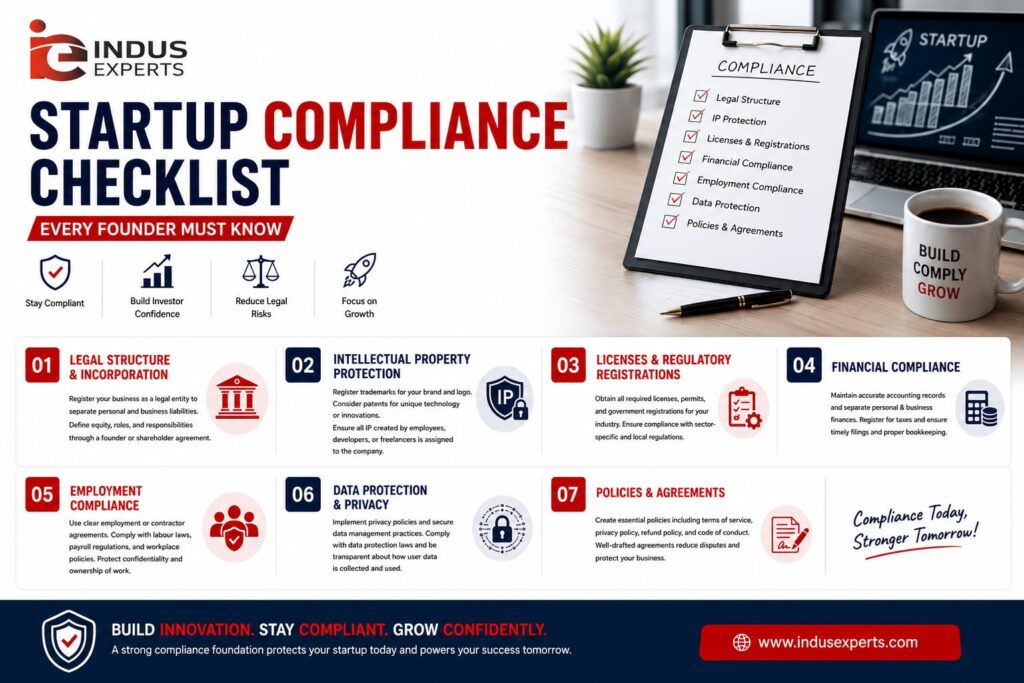
Startup Compliance Checklist Every Founder Must Know
Starting a business is exciting, but many startups struggle not because of poor ideas, but because of poor compliance management. Missing legal filings, tax obligations, or governance requirements can lead to penalties, investor concerns, and operational disruptions. For startups planning long-term growth, compliance is not just a legal formality — it is a business necessity.
Professional firms like Indus Experts operate in the professional services and financial consulting sector, helping startups with incorporation, compliance management, governance, due diligence, legal advisory, and global business structuring.
Why Startup Compliance Matters
Proper compliance helps startups:
- Avoid legal penalties
- Build investor confidence
- Maintain business credibility
- Ensure smooth operations
- Prepare for fundraising and expansion
Investors and financial institutions prefer startups with transparent governance and proper legal structures.
Essential Startup Compliance Checklist
1. Choose the Right Business Structure
Founders should select the correct structure based on funding plans, scalability, and operational needs. Common structures include:
- Private Limited Company
- LLP
- OPC
Improper structuring can create future tax and compliance complications.
Indus Experts assists startups with company incorporation and global business structuring while ensuring compliance with corporate regulations.
2. Complete Company Registration Properly
Every startup must ensure:
- PAN and TAN registration
- GST registration (if applicable)
- Director Identification Number (DIN)
- Digital Signature Certificate (DSC)
- Registered office compliance
Accurate documentation helps avoid future legal issues.
3. Maintain ROC Compliance
Startups registered under the Companies Act must complete:
- Annual filings
- Board resolutions
- Financial statement filings
- Statutory record maintenance
Missing ROC deadlines can result in penalties and director disqualification.
4. Manage Tax Compliance
Founders should ensure timely:
- GST filings
- Income tax returns
- TDS compliance
- Payroll and employee tax management
Strong financial discipline improves operational stability and investor trust.
5. Protect Intellectual Property
Startups should secure:
- Trademark registration
- Patent protection
- Copyrights
- Brand assets
Protecting intellectual property helps maintain competitive advantage and business value.
Indus Experts provides IP rights and patent advisory services that help businesses safeguard their innovations and brand identity.
6. Draft Important Legal Agreements
Startups must maintain proper legal documentation, including:
- Founder agreements
- Shareholder agreements
- Employment contracts
- Non-disclosure agreements (NDAs)
- Vendor and service agreements
Clear agreements reduce operational disputes and legal risks.
7. Build Strong Corporate Governance
Good governance improves accountability, transparency, and investor confidence. Startups should establish:
- Internal controls
- Financial reporting systems
- Defined operational responsibilities
- Compliance tracking systems
Indus Experts offers governance, due diligence, and risk assurance services to help businesses maintain strong compliance frameworks.
8. Prepare for Due Diligence
Investors carefully evaluate startups before funding. Businesses should maintain:
- Proper financial records
- Legal documentation
- Compliance history
- Cap table clarity
- Governance systems
Well-prepared startups are more likely to attract investment successfully.
How Indus Experts Assists Startups
Indus Experts brings together Chartered Accountants, Company Secretaries, lawyers, and financial experts to support startups through:
- Company incorporation
- Compliance automation
- Corporate legal advisory
- Governance and due diligence
- Risk assurance
- IPO and investor readiness
- Global incorporation and expansion support
The firm helps startups build legally compliant, scalable, and investor-ready businesses while minimizing operational and regulatory risks.
Conclusion
Compliance is not something startups should postpone until later stages. Proper legal structuring, governance, tax management, and regulatory compliance are essential from day one. Startups that proactively manage compliance are better positioned for sustainable growth, investor confidence, and long-term success.With expert support from Indus Experts, founders can focus on scaling their businesses while ensuring their operations remain compliant, secure, and future-ready.